Product Concept · Responsible Commerce · Madagascar
A marketplace idea grounded in everyday needs.
I started Lokaly in 2024 to explore a digital marketplace connecting local producers, responsible products and opportunities to reduce food waste. The concept received the “Mon Projet Innovant” award at CFME in 2024.
- Role
- Initiator & founder
- Year
- 2024
- Stage
- Concept designed to high-fidelity screens · not launched
- Recognition
- Mon Projet Innovant, CFME 2024
05 / Product concept
Lokaly
Responsible commerce

01 / Why this problem
Better access, less waste and a more direct connection.
The concept grew from questions around food loss, producer visibility and affordable products in Madagascar: a digital way for producers and merchants to offer what is available and for customers to find it, plus responsible alternatives and a separate proposition for surplus food.
02
Service actors.
Lokaly · marketplace concept
Connects supply and demand
Local producers and vendors
- SideSupply
- RoleMake products visible and communicate offers and availability.
Businesses with food surplus
- SideSupply
- RoleOffer remaining products while information is still relevant.
Consumers
- SideDemand
- RoleDiscover relevant options, evaluate value and know how to obtain them.
Service actors from the concept, not research personas.
03 / Product question
How could the same service make sense to buyers and sellers?
A marketplace has more than one journey: availability and trust on the supply side, discovery, timing and clarity on the customer side.
04 / Concept scope
Concept scope and potential UX choices.
Product discovery
Local and responsible products easier to find: category, location, price and availability are the evaluation data.
Surplus food offers
Because surplus food is time-sensitive, the concept raises service-design questions of its own, in the order a customer asks them:
- NowWhat is available now?
- Until whenUntil when is it available?
- ValidityIs the offer still valid?
- AccessHow do I obtain it?
The questions a time-sensitive surplus offer raises (concept). Multiple objectives, one coherent service
The concept combined local produce, surplus food and eco-conscious products; a first release should probably focus on one clear use case.
05 / The service flow
One path from the home page to the invoice.
The user flow drawn in 2024 follows one purchase from the home page to the invoice; its only forks are whether the person is signed in and whether they pay online.
- HomeChoose a category or search
- ProductOpen the details
- BasketAdd to the basketSign-up prompt here.
- OrderSigned in?Otherwise authentication first.
- PaymentPay online or not
- InvoiceValidation and invoice
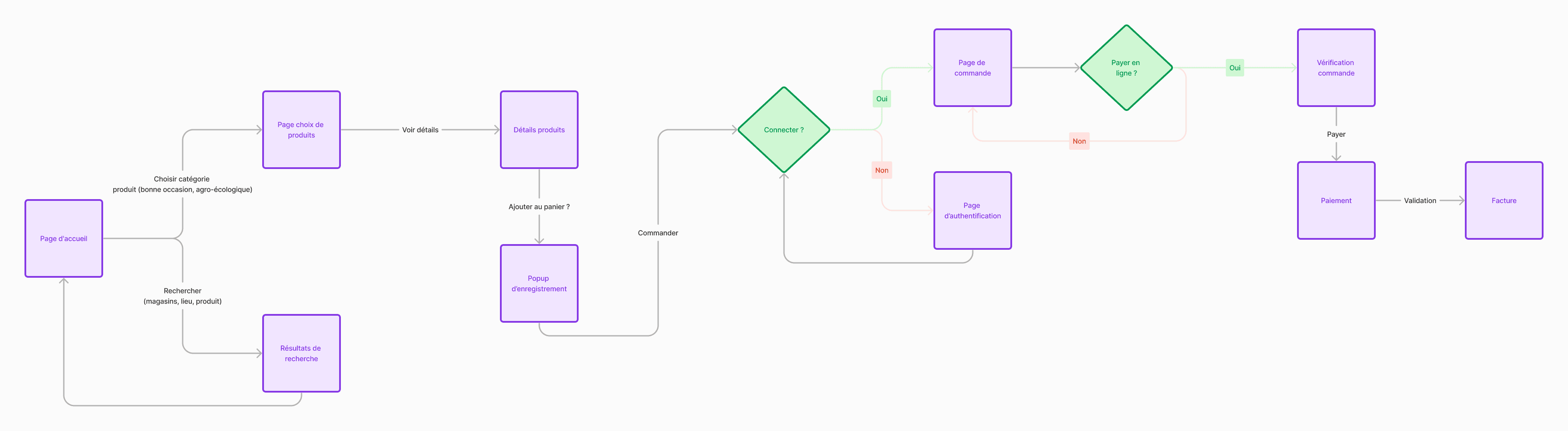
Drawn in Figma in 2024; the intended service, not measured behaviour.
06 / From the idea to the screens
Wireframes first, then one high-fidelity market screen.
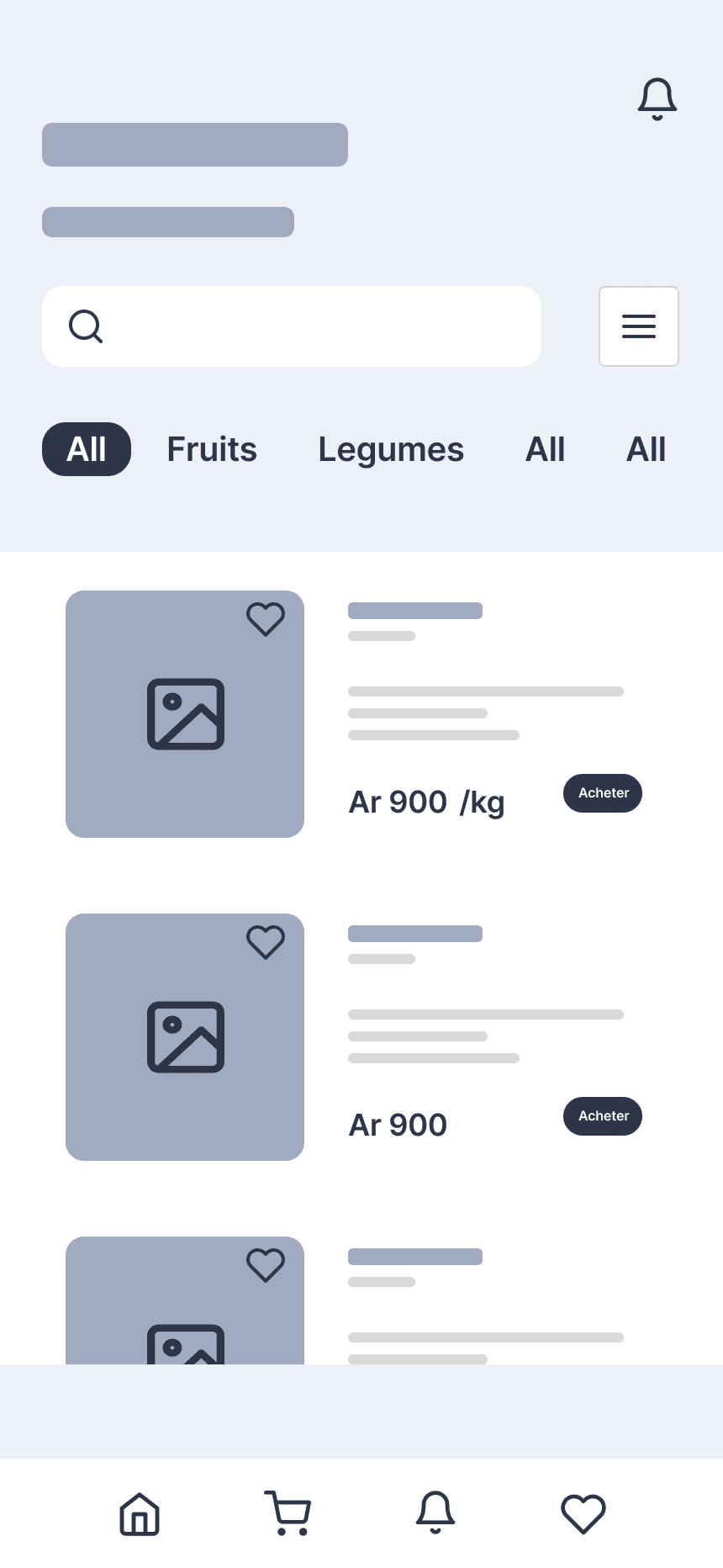
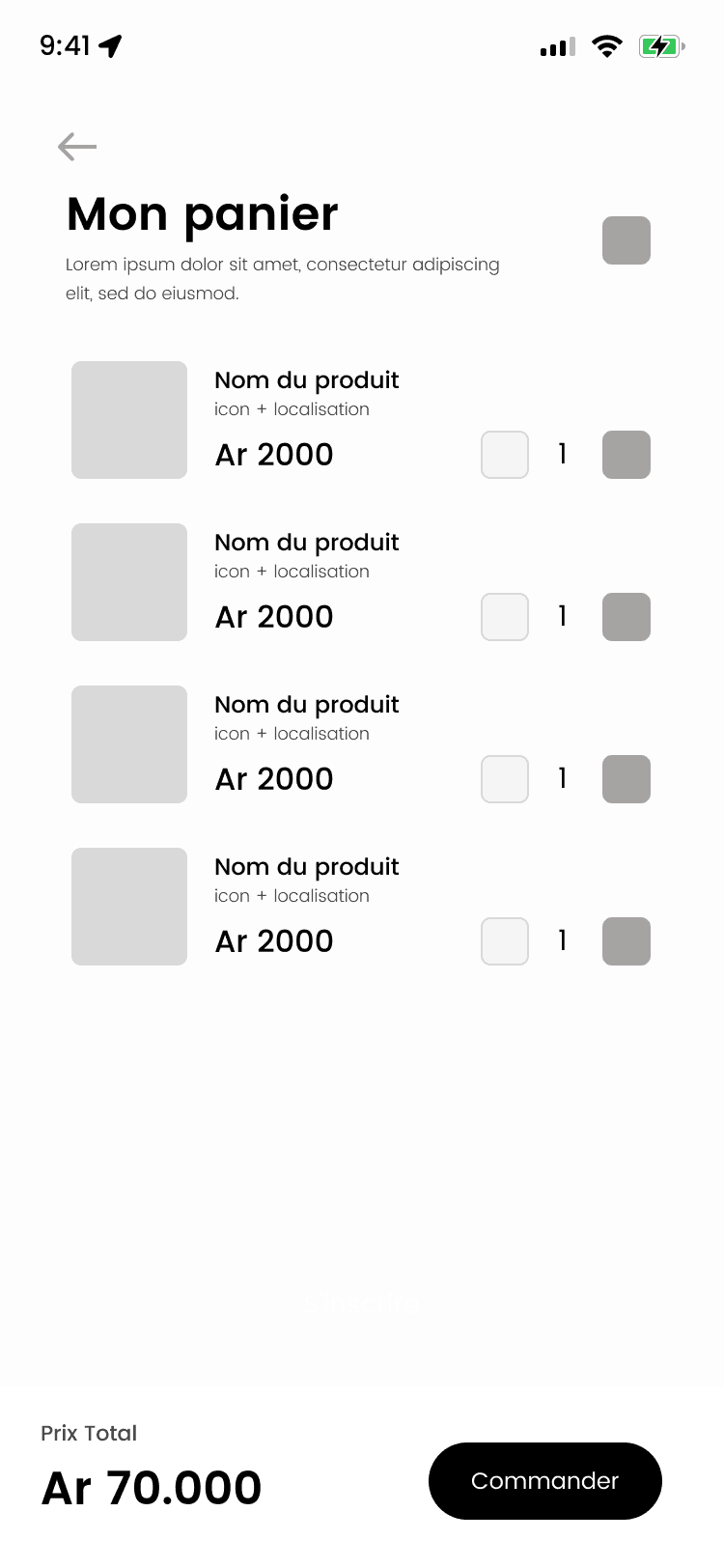
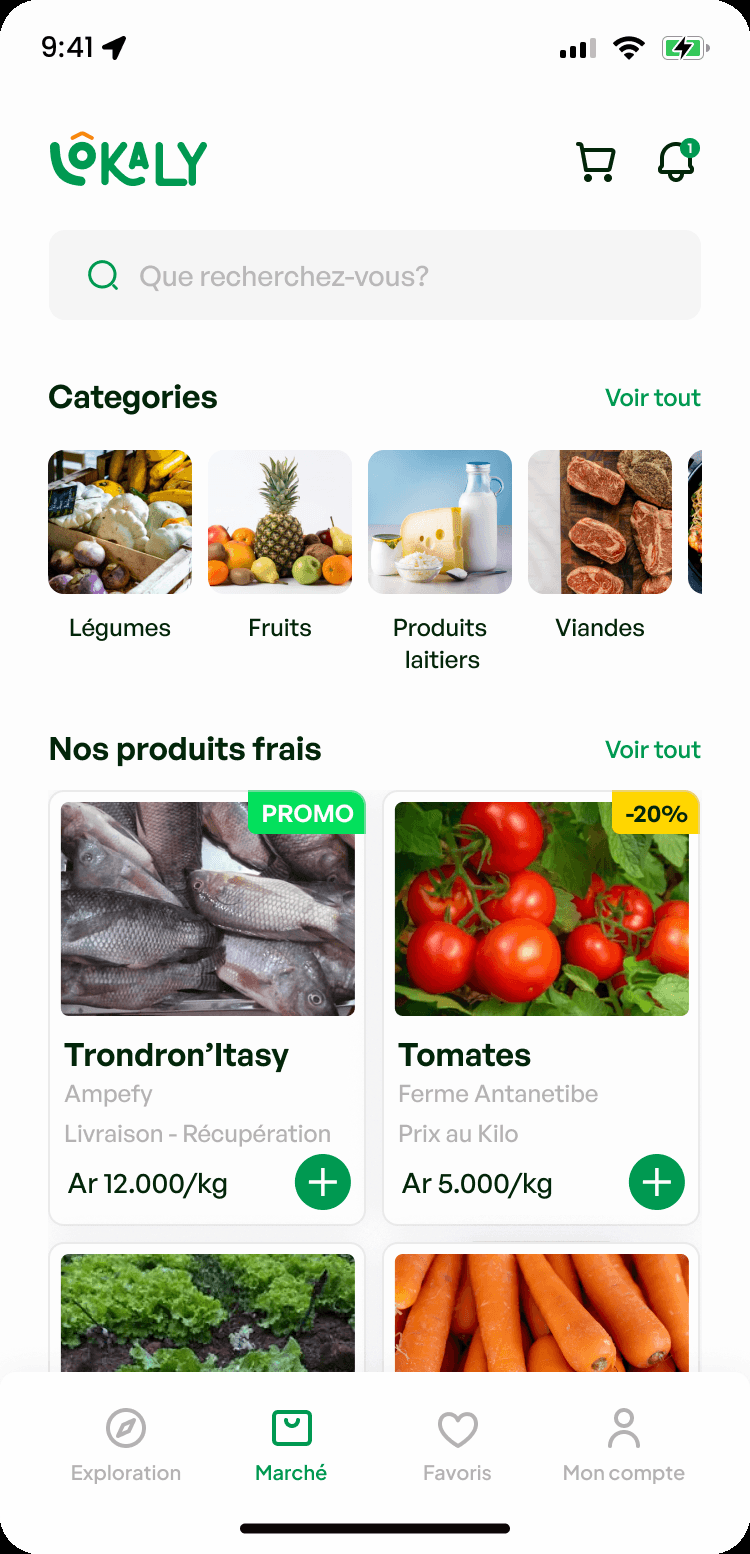
The wireframes set the structure of the home and the basket; the high-fidelity market screen keeps it and adds what the concept needed: photographed categories, fresh products with their producer and their delivery or pickup option, a promotion badge.
The market’s words, not the platform’s
- Problem
- Buyers compare fresh products as at a market: by kind, origin and price per kilo.
- UX principle
- Match between system and the real world (opens in a new tab) · Nielsen Norman GroupThe market screen illustrates it: the market’s words and units, Ar/kg, producer and place, delivery or pickup.
- Design decision
- Photographed categories; one card per product with producer, place, price per kilo, pickup or delivery.
- Visual evidence
- Market screen above.
- Outcome · status
- Designed in 2024 · not launched.
Designed in Figma in 2024; not launched, no usage claimed. Product detail, basket and seller profile use demonstration shop names and are not reproduced.
07
Recognition, not fabricated traction.
Lokaly received the CFME “Mon Projet Innovant” award in 2024.
Recognition
Mon Projet Innovant · CFME 2024
Competition recognition of the concept in 2024. Not product-market fit, environmental impact, completed transactions or usability.
08
What I learned.
Responsible innovation still rests on basic product questions: who uses the service, why trust it, what is essential, what can be delivered reliably. An ambitious vision needs one focused first journey.